Hard Water Problems in Elk Grove and Why a Softener Actually Helps
Elk Grove’s water contains high mineral content that causes scale buildup, dry skin, and appliance damage. Professional water softener installation removes these minerals before they harm your plumbing system. The process involves ion exchange technology that replaces calcium and magnesium with sodium or potassium ions. Elk Grove Water District water quality reports.
Water hardness in Elk Grove typically measures 12-18 grains per gallon according to the Elk Grove Water District’s annual water quality reports. This level falls into the “very hard” category and affects everything from your water heater efficiency to soap lathering ability. Without treatment, hard water reduces appliance lifespan by up to 30% and increases energy costs by forcing systems to work harder.
Understanding Elk Grove’s Hard Water Challenge
The Sacramento County water supply that serves Elk Grove contains dissolved calcium and magnesium from limestone deposits in the Sierra Nevada mountains. As groundwater travels through these mineral-rich formations, it picks up hardness minerals that remain in the water when it reaches your tap.
Homeowners in zip codes 95624, 95757, and 95758 experience similar hardness levels because they all draw from the same regional water sources. The hardness varies slightly by season, with levels typically highest during summer months when demand increases and water travels longer distances through distribution systems.
Hard water creates visible problems throughout your home. White scale deposits form on faucets, showerheads develop crusty buildup, and dishes come out of the dishwasher with spots. These mineral deposits also accumulate inside pipes, water heaters, and appliances where they reduce efficiency and eventually cause failures.
How Water Softeners Work in Sacramento County Homes
Traditional ion exchange water softeners use resin beads charged with sodium or potassium ions. As hard water passes through the resin tank, calcium and magnesium ions attach to the beads while sodium or potassium ions are released into the water. This process continues until the resin becomes saturated with hardness minerals.
The regeneration cycle automatically flushes the resin bed with brine solution, removing accumulated minerals and recharging the beads with sodium or potassium. This process typically occurs every 2-3 days depending on water usage and hardness level. The brine solution and removed minerals drain away through your home’s plumbing system.
Salt-free water conditioners use different technology. Instead of removing minerals, they alter the molecular structure of calcium and magnesium so they cannot form scale deposits. These systems work well for preventing scale but don’t provide the same benefits as traditional softeners for soap efficiency and skin comfort.
Professional Installation Process for Elk Grove Homes
Professional water softener installation begins with a comprehensive water test to determine exact hardness levels and any other water quality issues. Technicians measure flow rates to properly size the system for your household’s water usage patterns and plumbing configuration.
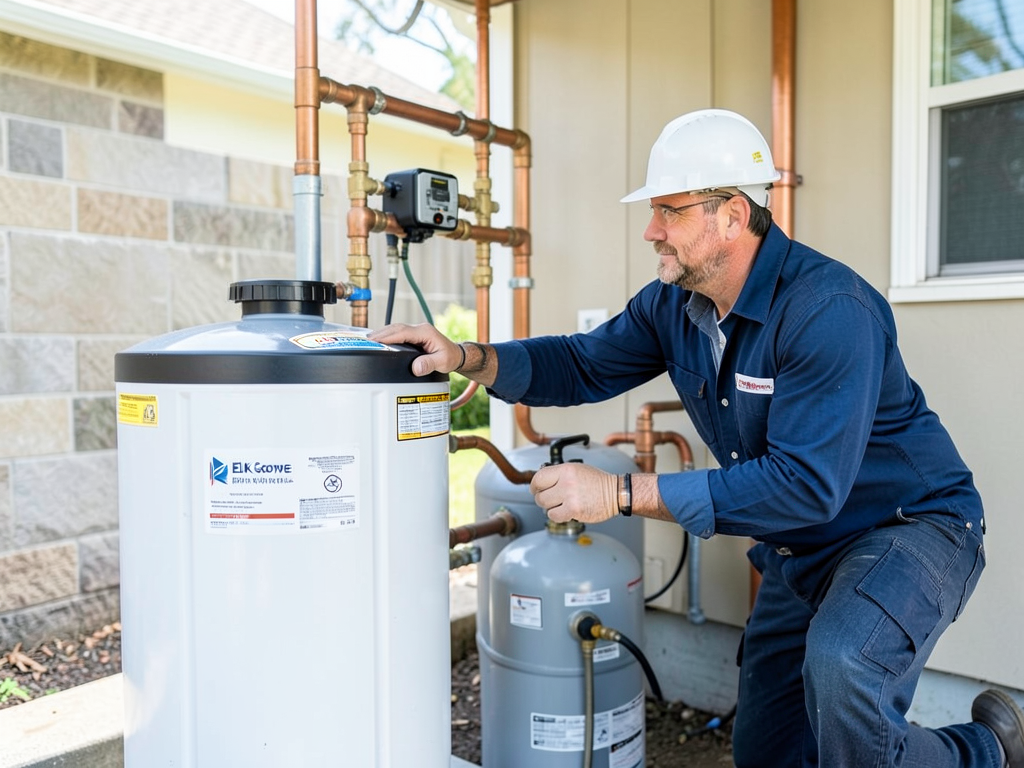
Installation typically requires cutting into the main water line after the meter but before it enters your home. This location allows the softener to treat all incoming water while maintaining proper water pressure throughout your plumbing system. The process includes installing bypass valves for maintenance access and emergency water shutoff.
Modern installations often include smart monitoring systems that track water usage, salt levels, and system performance. These features alert homeowners when regeneration is needed or if the system detects unusual water flow that might indicate a leak somewhere in the home.
Impact on Local Appliances and Plumbing Systems
Water heaters in Elk Grove homes suffer significantly from hard water scale buildup. The mineral deposits create an insulating layer on heating elements, forcing the unit to use more energy to heat water. This reduces efficiency by 20-30% and can shorten the appliance’s lifespan by several years.
Dishwashers and washing machines experience similar problems. Scale buildup on internal components causes mechanical wear and reduces cleaning effectiveness. Clothes washed in hard water feel stiff and fade faster because minerals interfere with detergent action. Dishes develop spots and film that require additional cleaning.. Read more about Getting Clean Drinking Water in West Sacramento with a Whole Home Filter.
Pipes throughout your home accumulate scale internally over time. This buildup reduces water flow and increases pressure on your plumbing system. In severe cases, scale can completely block pipes, requiring costly replacements. The problem worsens in homes with older galvanized steel pipes common in Elk Grove’s established neighborhoods.
Maintenance Requirements for California’s Climate
California’s drought conditions affect water softener maintenance schedules. During dry periods, water hardness often increases because mineral concentrations become more concentrated in available water supplies. This means more frequent regeneration cycles and higher salt usage during drought years.
Annual maintenance includes checking resin bed condition, cleaning brine tanks, and testing water hardness output. Technicians also inspect bypass valves and check for any leaks in the system. Professional maintenance prevents costly repairs and ensures the softener continues operating at peak efficiency. EPA WaterSense program.
Salt delivery services eliminate the hassle of transporting heavy bags from stores. Scheduled deliveries ensure you never run out of salt during high-usage periods. Many local providers offer automatic delivery based on your actual water usage patterns and hardness levels.
Professional vs. DIY Installation Considerations
DIY water softener installation might seem cost-effective initially, but professional installation provides significant advantages. Licensed plumbers understand local building codes, obtain necessary permits, and ensure proper system sizing. They also provide warranties on both labor and equipment that protect your investment.
Professional installation includes proper drainage setup for regeneration cycles and ensures the system meets all Sacramento County water regulations. Incorrect installation can cause water pressure problems, leaks, or even cross-contamination between your home’s water supply and the softener’s brine solution.
Experienced technicians also provide valuable guidance on system selection based on your specific water quality, household size, and budget. They can recommend features like high-efficiency regeneration cycles that save water and salt over time, reducing operating costs.
Eco-Friendly Water Treatment Options
Environmental concerns about salt discharge from traditional softeners have led to more eco-friendly alternatives. Some systems use potassium chloride instead of sodium chloride, which is better for plants and soil if you use softened water for irrigation. Others incorporate water-saving features that reduce regeneration frequency.
Reverse osmosis systems provide excellent water quality for drinking and cooking while removing additional contaminants beyond hardness minerals. These systems work well in combination with whole-house softeners, providing purified water at specific taps while protecting your plumbing from scale buildup.
Modern softeners include demand-initiated regeneration that only runs when needed based on actual water usage rather than timed cycles. This feature can reduce water and salt consumption by 50% compared to older timer-based systems while maintaining consistent water quality.
Cost Savings and Return on Investment
Professional water softener installation typically costs between $1,500 and $3,500 in the Elk Grove area, depending on system size and features. While this represents a significant upfront investment, the savings on appliance repairs, energy costs, and cleaning products often pay for the system within 3-5 years.
Water heaters operating with softened water use 20-30% less energy, potentially saving $100-200 annually on utility bills. Appliances last 30-50% longer when protected from scale buildup, delaying expensive replacement costs. The improved cleaning effectiveness also reduces soap and detergent usage by up to 50%.
Softened water prevents costly plumbing repairs caused by scale accumulation in pipes and fixtures. The reduced mineral buildup also means less time spent cleaning scale from faucets, shower doors, and other surfaces, saving homeowners valuable time and effort.
Local Water Quality Resources and Testing
The Elk Grove Water District provides annual water quality reports that detail hardness levels, mineral content, and any detected contaminants. These reports help homeowners understand their specific water quality challenges and make informed decisions about treatment options.
Professional water testing goes beyond basic hardness measurement to identify other potential issues like iron content, pH levels, and total dissolved solids. This comprehensive analysis ensures the selected treatment system addresses all water quality concerns rather than just hardness.
Local plumbing professionals stay current on Sacramento County water regulations and building code requirements for water treatment equipment. They understand the specific challenges posed by regional water sources and can recommend systems optimized for local conditions.
Frequently Asked Questions
How often should I add salt to my water softener?
Most households need to add salt every 4-6 weeks, depending on water usage and hardness level. High-efficiency systems with demand-initiated regeneration may use less salt than older timer-based models.
Can I drink water from a water softener?
Yes, water from a properly functioning softener is safe to drink. The amount of sodium added is minimal – about 12.5 milligrams per 8-ounce glass for water with 10 grains per gallon hardness.
How long does a water softener last?
Quality water softeners typically last 10-15 years with proper maintenance. The resin bed may need replacement after 7-10 years, while the control valve and other components can last the full lifespan of the system.
Will a water softener improve my skin and hair?
Yes, softened water allows soaps and shampoos to lather better and rinse more completely. Many people notice softer skin and shinier hair after installing a water softener because minerals that dry out skin and hair are removed.
Do I need a permit to install a water softener in Elk Grove?
Most water softener installations in Sacramento County require permits to ensure proper plumbing connections and drainage. Professional installers typically handle permit requirements as part of their service.
Take Action Against Hard Water Today
Hard water problems in Elk Grove homes won’t resolve themselves – they only get worse over time. Scale buildup continues to damage your plumbing system and appliances while increasing your utility costs. Professional water softener installation provides immediate relief from these issues and long-term protection for your home’s water infrastructure.
Call (209) 260-0077 today to schedule your water quality test and consultation. Our licensed plumbers will evaluate your specific water conditions, recommend the right system for your home, and provide transparent pricing with no hidden fees. Don’t wait until scale damage requires expensive repairs – take control of your water quality now.
Pick up the phone and call (209) 260-0077 before the next scale deposit forms on your fixtures. Your appliances, plumbing system, and skin will thank you for making the switch to softened water. We serve all of Elk Grove including the Laguna West, Stonelake, and Valley Hi neighborhoods with prompt, professional service.
{
“@context”: “https://schema.org”,
“@type”: “BlogPosting”,
“headline”: “Hard Water Problems in Elk Grove and Why a Softener Actually Helps”,
“description”: “Discover how Elk Grove’s hard water affects your home and why professional water softener installation is essential for protecting your appliances and plumbing.”,
“wordCount”: 1710,
“datePublished”: “2026-02-19T14:12:00.000Z”,
“dateModified”: “2026-02-19T14:12:00.000Z”,
“inLanguage”: “en-US”,
“mainEntityOfPage”: {
“@type”: “WebPage”,
“@id”: “https://apexplumbingsacramento.com”
},
“publisher”: {
“@type”: “LocalBusiness”,
“name”: “Apex Plumbing Sacramento”,
“url”: “https://apexplumbingsacramento.com”
},
“author”: {
“@type”: “Organization”,
“name”: “Apex Plumbing Sacramento”,
“url”: “https://apexplumbingsacramento.com”
},
“image”: {
“@type”: “ImageObject”,
“url”: “https://apexplumbingsacramento.com/wp-content/uploads/2026/03/hard-water-problems-in-elk-grove-and-why-a-softene-1.png”
}
}
{
“@context”: “https://schema.org”,
“@type”: “Plumber”,
“name”: “Apex Plumbing Sacramento”,
“url”: “https://apexplumbingsacramento.com”,
“address”: {
“@type”: “PostalAddress”,
“addressLocality”: “Sacramento”
},
“areaServed”: {
“@type”: “City”,
“name”: “Sacramento”
}
}
{
“@context”: “https://schema.org”,
“@type”: “FAQPage”,
“mainEntity”: [
{
“@type”: “Question”,
“name”: “How often should I add salt to my water softener?”,
“acceptedAnswer”: {
“@type”: “Answer”,
“text”: “Most households need to add salt every 4-6 weeks, depending on water usage and hardness level. High-efficiency systems with demand-initiated regeneration may use less salt than older timer-based models.”
}
},
{
“@type”: “Question”,
“name”: “Can I drink water from a water softener?”,
“acceptedAnswer”: {
“@type”: “Answer”,
“text”: “Yes, water from a properly functioning softener is safe to drink. The amount of sodium added is minimal – about 12.5 milligrams per 8-ounce glass for water with 10 grains per gallon hardness.”
}
},
{
“@type”: “Question”,
“name”: “How long does a water softener last?”,
“acceptedAnswer”: {
“@type”: “Answer”,
“text”: “Quality water softeners typically last 10-15 years with proper maintenance. The resin bed may need replacement after 7-10 years, while the control valve and other components can last the full lifespan of the system.”
}
},
{
“@type”: “Question”,
“name”: “Will a water softener improve my skin and hair?”,
“acceptedAnswer”: {
“@type”: “Answer”,
“text”: “Yes, softened water allows soaps and shampoos to lather better and rinse more completely. Many people notice softer skin and shinier hair after installing a water softener because minerals that dry out skin and hair are removed.”
}
},
{
“@type”: “Question”,
“name”: “Do I need a permit to install a water softener in Elk Grove?”,
“acceptedAnswer”: {
“@type”: “Answer”,
“text”: “Most water softener installations in Sacramento County require permits to ensure proper plumbing connections and drainage. Professional installers typically handle permit requirements as part of their service.”
}
}
]
}
{
“@context”: “https://schema.org”,
“@type”: “BreadcrumbList”,
“itemListElement”: [
{
“@type”: “ListItem”,
“position”: 1,
“name”: “Home”,
“item”: “https://apexplumbingsacramento.com”
},
{
“@type”: “ListItem”,
“position”: 2,
“name”: “Blog”,
“item”: “https://apexplumbingsacramento.com/blog”
},
{
“@type”: “ListItem”,
“position”: 3,
“name”: “Hard Water Problems in Elk Grove and Why a Softener Actually Helps”
}
]
}
{
“@context”: “https://schema.org”,
“@type”: “Service”,
“serviceType”: “Plumbing”,
“provider”: {
“@type”: “LocalBusiness”,
“name”: “Apex Plumbing Sacramento”,
“url”: “https://apexplumbingsacramento.com”
},
“areaServed”: {
“@type”: “City”,
“name”: “Sacramento”
},
“description”: “Discover how Elk Grove’s hard water affects your home and why professional water softener installation is essential for protecting your appliances and plumbing.”
}