
Legal Rainwater Harvesting for Sacramento Gardeners (What You Can and Cannot Do)
California’s water laws have changed dramatically in recent years, and Sacramento gardeners need to understand exactly what’s legal before installing any rainwater harvesting system. The good news is that collecting rainwater for your garden is now fully legal in Sacramento, but there are specific rules you must follow to stay compliant with state and local regulations. California Rainwater Capture Act of 2012.
Since 2012, California law has allowed homeowners to capture and store rainwater without a water rights permit, thanks to the Rainwater Capture Act. However, Sacramento has additional local requirements that go beyond state law, particularly when it comes to system size, installation methods, and how the water can be used. Understanding these differences can save you from costly fines and ensure your system works properly for years to come. The Best Water Heater Replacement Options for North Natomas Homeowners.
The City of Sacramento Department of Utilities requires permits for most rainwater harvesting systems that involve pumps, connections to your home’s plumbing, or storage tanks larger than 5,000 gallons. Even smaller systems need to follow specific guidelines about where tanks can be placed, how they connect to your irrigation system, and what types of backflow prevention devices are required. These rules exist to protect Sacramento’s municipal water supply and prevent contamination. City of Sacramento Water Conservation Programs.
Before you buy any rain barrels or cisterns, you need to understand the legal framework that governs rainwater harvesting in Sacramento. This guide breaks down exactly what you can and cannot do, when you need permits, and how to work with licensed Sacramento plumbers to ensure your system is fully compliant with all local codes and regulations. Fast Emergency Plumbers in Midtown Sacramento for After Hours Repairs.
Understanding the Rainwater Capture Act of 2012
The foundation of legal rainwater harvesting in California is Assembly Bill 1750, known as the Rainwater Capture Act of 2012. This law removed the previous requirement that homeowners obtain a water right permit from the State Water Resources Control Board before collecting rainwater from their roofs. The act specifically allows residential, commercial, and governmental landowners to install rain capture systems for specified uses. How to Spot a Slab Leak in Your Land Park Home Before It Causes Serious Damage.
Under this law, you can legally collect rainwater that falls on your property and use it for outdoor purposes like landscape irrigation, gardening, and washing outdoor surfaces. The water must be collected from impervious surfaces like roofs, and you cannot divert water from natural watercourses or springs. The act also requires that all systems comply with local building codes and health regulations.
However, the Rainwater Capture Act does not give you unlimited freedom. The water collected is considered non-potable, meaning it’s not safe for drinking, cooking, or bathing without advanced treatment. Sacramento County and the City of Sacramento have additional ordinances that regulate where you can place tanks, how large they can be, and what safety features they must include. These local rules are designed to protect public health and prevent mosquito breeding in standing water.
The act also established guidelines for commercial properties and multi-family buildings, which have different requirements than single-family homes. If you’re a property manager or own a commercial building in Sacramento, you’ll need to follow additional permitting processes and may need to demonstrate that your system won’t impact downstream water users or stormwater management systems.
Sacramento City vs. County: Local Permitting Requirements
The permitting requirements for rainwater harvesting systems differ significantly between Sacramento City and Sacramento County. In the city, you need a building permit for any system that includes a pump, connects to your home’s plumbing, or uses a storage tank larger than 5,000 gallons. The city also requires permits for underground cisterns and any system that might affect your property’s drainage patterns. Plumbing Inspection Checklist.
Sacramento County has slightly different thresholds. You need a permit for systems with tanks over 10,000 gallons or any system that requires electrical connections. The county also has specific setback requirements that dictate how far cisterns must be from property lines, septic systems, and buildings. These setbacks vary based on tank size and whether the tank is above or below ground.
For systems under the permit thresholds, you still need to follow all local building codes and health regulations. This includes proper mosquito prevention measures, ensuring tanks are structurally sound, and following the California Plumbing Code for any connections to your home’s irrigation system. Even small rain barrels need to be properly secured and positioned to prevent tipping or damage during storms.
The permitting process typically involves submitting detailed plans to the local building department, paying permit fees, and scheduling inspections. A licensed Sacramento plumber must sign off on any system that connects to your home’s plumbing or includes pumps. This ensures the installation meets all local codes and won’t create cross-connection risks with your potable water supply.
The ‘Purple Pipe’ Rule: Non-Potable vs. Potable Use
One of the most critical rules for rainwater harvesting in Sacramento is the strict separation between potable and non-potable water systems. Harvested rainwater is considered non-potable and can only be used for outdoor irrigation, washing outdoor surfaces, and similar non-drinking purposes. Using rainwater for drinking, cooking, or bathing requires advanced treatment systems that meet state health standards.
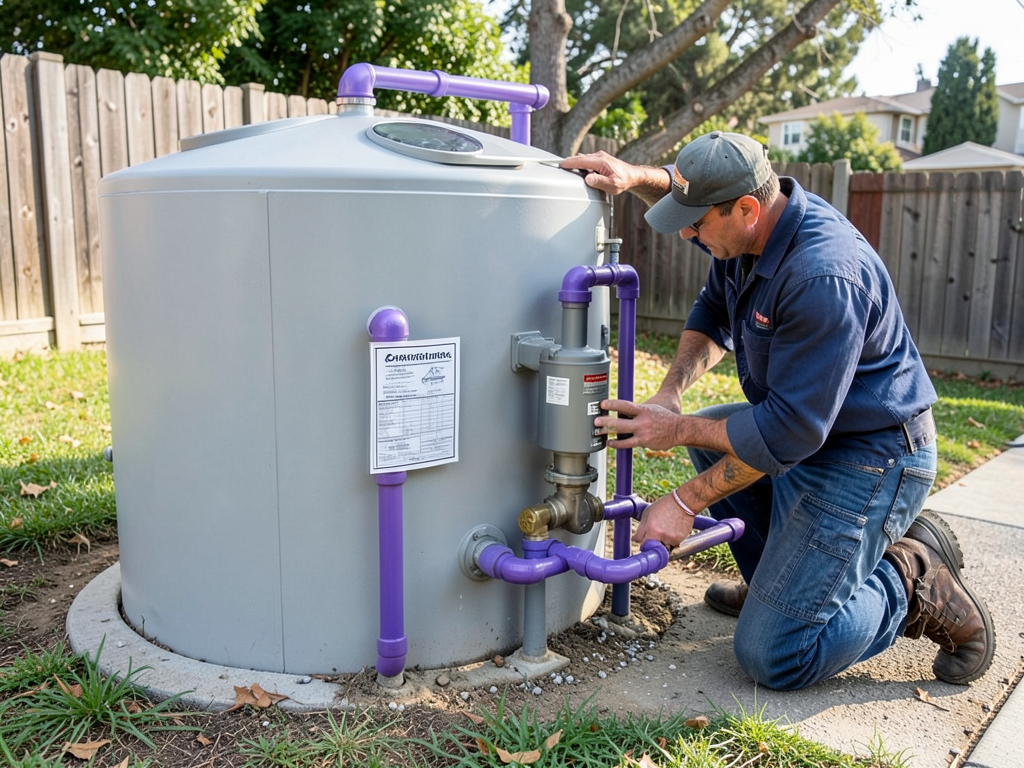
The California Plumbing Code requires that non-potable water systems be clearly identified with purple pipe and warning labels. This color-coding helps prevent accidental cross-connections where non-potable water could enter your drinking water supply. In Sacramento, this requirement is strictly enforced, and violations can result in fines and mandatory system modifications.
Backflow prevention devices are mandatory for any system that connects to your home’s plumbing or municipal water supply. These devices prevent contaminated water from flowing backward into clean water lines. The specific type of backflow preventer required depends on your system design and whether it includes pumps or pressurized components.
Sacramento’s hard water conditions also affect how rainwater systems perform. The high mineral content in our municipal water can cause scale buildup in pipes and fixtures, but rainwater is naturally soft and mineral-free. This makes it ideal for plants and can actually extend the life of your irrigation system by reducing mineral deposits in sprinkler heads and drip emitters.
Health and Safety Compliance: Backflow Prevention
Backflow prevention is perhaps the most critical safety requirement for rainwater harvesting systems in Sacramento. The California Plumbing Code Chapter 16 and Sacramento County regulations require specific backflow prevention devices based on your system design. These devices prevent contaminated water from flowing back into the clean water supply, which could happen during pressure drops or system failures.
For simple rain barrel systems that only connect to outdoor spigots, a hose-bib vacuum breaker may be sufficient. However, systems with pumps, pressurized lines, or connections to your home’s plumbing require more sophisticated backflow preventers like reduced pressure principle assemblies. These devices must be tested annually by certified technicians to ensure they’re functioning properly.
The installation location of backflow preventers is also regulated. They must be installed above ground, accessible for testing and maintenance, and protected from freezing temperatures. In Sacramento’s climate, this often means installing devices in insulated boxes or choosing freeze-resistant models. Improper installation can result in system failure and potential contamination of your potable water supply.
Professional plumbers in Sacramento are trained to select and install the correct backflow prevention devices for your specific system. They understand the local codes and can ensure your installation meets all safety requirements. This is why DIY installations that connect to home plumbing are risky and may violate local regulations, even if they seem to work properly initially.
Available Sacramento Water Rebates
Sacramento offers several rebate programs that can help offset the cost of rainwater harvesting systems. The City of Sacramento Department of Utilities provides rebates through the River-Friendly Landscaping program, which offers up to $500 for rain barrels and cisterns when installed as part of a larger water conservation project. These rebates require pre-approval and documentation of water savings.
Sacramento County also offers water conservation rebates through various programs, though availability and amounts change based on current drought conditions and budget allocations. Some programs specifically target large-scale commercial installations, while others focus on residential rain barrels and small cisterns. Check with your local water provider for current rebate offerings.
The River-Friendly Landscaping program also provides technical assistance and educational resources for rainwater harvesting. They offer workshops on system design, installation best practices, and how to maximize water collection efficiency. These resources are particularly valuable for DIY installers who want to ensure their systems meet all local requirements.
Beyond government rebates, some Sacramento nurseries and garden centers offer discounts on rain barrels and installation services. These local businesses often partner with water conservation programs and can provide guidance on system selection and placement. Some may even offer package deals that include both the equipment and professional installation services.
Step-by-Step Permit Process for Large Systems
- Determine System Requirements
Calculate your water needs, roof catchment area, and storage requirements. Systems over 5,000 gallons or those with pumps require permits in Sacramento City.
- Consult with Licensed Plumber
A Sacramento-licensed plumber must review your plans and ensure compliance with California Plumbing Code Chapter 16 and local ordinances.
- Submit Permit Application
File detailed plans with the City of Sacramento Department of Utilities or Sacramento County building department, including system schematics and material specifications.
- Schedule Inspections
Permits require multiple inspections: pre-installation, during installation, and final inspection to verify compliance with all codes.
- Obtain Final Approval
Once inspections pass, you’ll receive final approval and can activate your system. Keep all documentation for future reference.
Common Mistakes That Violate Sacramento Regulations
Many Sacramento gardeners make simple mistakes that can result in fines or system failures. One of the most common violations is using rainwater for potable purposes without proper treatment. Even if you’re just using it for your vegetable garden, the water must still be considered non-potable unless it’s been treated to drinking water standards.
Another frequent mistake is improper mosquito prevention. Standing water in rain barrels and cisterns creates breeding grounds for mosquitoes, which is a violation of Sacramento-Yolo Mosquito and Vector Control District regulations. All rainwater storage containers must have secure lids, screened overflow outlets, and be designed to prevent mosquito access.
DIY installations that connect to home plumbing without proper backflow prevention are also common violations. These systems may work initially but pose serious health risks and violate California Plumbing Code requirements. The cost of correcting these violations often exceeds the original installation cost.
Many homeowners also fail to obtain required permits for systems that exceed local thresholds. Even if your system seems simple, if it includes a pump or exceeds size limits, you need proper permits. Working without permits can result in fines, mandatory removal of the system, and complications when selling your home.
Professional Installation vs. DIY: When You Need a Plumber
Understanding when you need professional installation is crucial for staying legal in Sacramento. If your system includes any of the following, you must hire a licensed Sacramento plumber: connections to your home’s plumbing, pumps or pressurized components, tanks over 5,000 gallons, or any underground installation. DIY installations are only permitted for simple above-ground rain barrels with gravity-fed irrigation.
Professional installation ensures your system meets all local codes and safety requirements. Licensed plumbers understand the California Plumbing Code, know how to properly install backflow prevention devices, and can ensure your system won’t create cross-connection risks. They also handle the permit process and coordinate inspections with local building departments.
The cost of professional installation varies based on system complexity, but it’s often comparable to or less than the cost of fines and corrections if you install something illegally. A typical professional installation for a medium-sized system with pump and proper connections might cost $2,000-$5,000, but this includes all permits, inspections, and compliance guarantees.
DIY installations might seem cheaper initially, but they often lead to problems that require professional correction. Improper installation can cause system failures, water damage, or health hazards. Additionally, if you sell your home, unpermitted work can complicate the sale process and may need to be corrected before closing.
Maintenance Requirements for Legal Compliance
Once your rainwater harvesting system is installed, you must maintain it properly to stay compliant with Sacramento regulations. This includes regular cleaning of gutters and screens to prevent debris from entering your storage tanks, checking and cleaning first-flush diverters, and ensuring all mosquito prevention devices are functioning properly.
Backflow prevention devices require annual testing by certified technicians. In Sacramento, this testing must be documented and the results submitted to the local water authority. Failure to maintain these devices can result in system shutdown and fines. Many professional plumbers offer maintenance contracts that include regular testing and certification.
Your system’s structural integrity must also be maintained. Above-ground tanks need to be checked for leaks, proper support, and secure anchoring. Underground cisterns require inspection for cracks, settling, and proper drainage around the tank. Any structural damage must be repaired promptly to prevent system failure or property damage.
During Sacramento’s dry season, you should drain and clean your system to prevent algae growth and sediment buildup. This maintenance is especially important if you plan to use the water for sensitive plants or edible gardens. Proper maintenance not only keeps you legal but also ensures your system provides clean, effective water for your garden.
Emergency Preparedness and System Safety
Rainwater harvesting systems in Sacramento must include emergency overflow provisions to handle extreme storm events. The California Plumbing Code requires that all systems have overflow outlets that can handle the maximum expected rainfall without causing property damage or flooding. These overflows must be directed away from structures and neighboring properties.
During Sacramento’s occasional winter storms, your system needs to handle sudden, heavy rainfall. This means having properly sized overflow pipes, secure tank connections, and clear drainage paths. Many systems fail during the first major storm because they weren’t designed to handle Sacramento’s specific rainfall patterns and intensities.
Safety features are also required for all rainwater harvesting systems. This includes secure tank lids to prevent drowning hazards, proper labeling of non-potable water lines, and protection against freezing in exposed pipes. In Sacramento’s climate, freezing is less of a concern than in colder regions, but some protection is still needed for exposed components.
Your system should also include isolation valves that allow you to shut off specific components for maintenance or repair without draining the entire system. These valves are required by code and make system maintenance much easier. Professional installers will include these features as part of a compliant installation.
Integration with Existing Irrigation Systems
Connecting your rainwater harvesting system to your existing irrigation setup requires careful planning to maintain legal compliance. The California Plumbing Code requires that non-potable water lines be completely separate from potable water lines, with no direct connections between the two systems. This means you’ll need separate valves, controllers, and distribution networks.
Many Sacramento gardeners use a dual-system approach where rainwater feeds specific zones of their irrigation system while municipal water serves others. This requires manual or automatic switching between sources based on rainwater availability. Smart controllers can automate this process, switching to municipal water when rainwater tanks are empty.
The pressure requirements for your irrigation system must also be considered. Rainwater systems often operate at lower pressures than municipal systems, which can affect sprinkler performance. Professional installers can design systems that maintain adequate pressure for your specific irrigation needs while staying within code requirements.
Drip irrigation systems are particularly well-suited for rainwater harvesting because they operate at low pressures and are efficient with limited water supplies. Many Sacramento gardeners use rainwater exclusively for their drip systems, reserving municipal water for high-pressure sprinkler zones. This approach maximizes water conservation while maintaining system performance.
Future-Proofing Your Rainwater System
When designing your rainwater harvesting system, consider future needs and potential code changes. Sacramento’s water regulations continue to evolve, and building codes may become more stringent over time. Installing a system that exceeds current minimum requirements can save you from costly upgrades later and may qualify you for additional rebates.
Consider installing larger storage capacity than you currently need. Water storage needs often increase as gardeners expand their landscapes or install more water-intensive plants. Having extra capacity also provides better drought protection and can help you meet future water conservation targets that Sacramento may implement.
Plan for potential integration with greywater systems in the future. While greywater harvesting has different regulations than rainwater, many Sacramento gardeners eventually want to combine both systems. Installing the necessary plumbing infrastructure during your initial installation can save significant costs if you decide to add greywater capabilities later.
Choose high-quality, durable materials that will last 20+ years. While cheaper components might save money initially, they often fail prematurely and require replacement. Professional installers can recommend materials that withstand Sacramento’s climate conditions and meet all current and anticipated code requirements.
Cost Considerations and ROI
The cost of a legal rainwater harvesting system in Sacramento varies widely based on size, complexity, and whether you hire professional installation. A simple DIY rain barrel setup might cost $100-$300, while a professionally installed system with pump and proper connections could range from $2,000-$10,000 or more.
Professional installation costs include permits, inspections, backflow prevention devices, and compliance guarantees. While this seems expensive compared to DIY options, it ensures your system is legal, safe, and won’t cause problems that require expensive corrections later. Many professional installers also offer warranties on their work.
The return on investment for rainwater harvesting systems depends on your water usage, local water rates, and available rebates. In Sacramento, where water rates are moderate but conservation is encouraged, most systems pay for themselves through reduced water bills within 5-10 years. This timeline can be shorter with available rebates and increased water rates.
Beyond financial returns, rainwater harvesting provides other benefits that are harder to quantify. These include increased drought resilience, better plant health from chlorine-free water, reduced stormwater runoff, and the satisfaction of reducing your environmental impact. Many Sacramento gardeners find these benefits worth the investment even if the financial payback takes longer.
Frequently Asked Questions
Is rainwater harvesting completely legal in Sacramento?
Yes, rainwater harvesting is completely legal in Sacramento thanks to the Rainwater Capture Act of 2012. However, you must follow local building codes, health regulations, and permitting requirements, especially for systems with pumps or tanks over 5,000 gallons.
Do I need a permit for a simple rain barrel system?
Small rain barrel systems under 5,000 gallons that don’t include pumps or connect to home plumbing typically don’t require permits in Sacramento City. However, you still need to follow health regulations about mosquito prevention and proper installation.
Can I use harvested rainwater for drinking or cooking?
No, harvested rainwater is considered non-potable in California and cannot be used for drinking, cooking, or bathing without advanced treatment that meets state health standards. It’s only legal for outdoor irrigation and similar non-drinking purposes.
What happens if I install a system without proper permits?
Installing a system without required permits can result in fines, mandatory removal of the system, and complications when selling your home. You may also face liability issues if the unpermitted system causes property damage or health hazards.
How often do I need to maintain my rainwater harvesting system?
Regular maintenance is required to stay compliant with Sacramento regulations. This includes cleaning gutters and screens, checking mosquito prevention devices, and annual testing of backflow prevention devices by certified technicians.
Are there rebates available for rainwater harvesting in Sacramento?
Yes, the City of Sacramento offers rebates through the River-Friendly Landscaping program, and Sacramento County has various water conservation rebate programs. Availability and amounts vary based on current drought conditions and budget allocations.
Can I install a rainwater system myself or do I need a professional?
You can install simple rain barrel systems yourself, but any system with pumps, connections to home plumbing, or tanks over 5,000 gallons requires professional installation by a licensed Sacramento plumber to meet code requirements.
Call (209) 260-0077 for Professional Rainwater Harvesting Installation
Installing a legal, compliant rainwater harvesting system in Sacramento requires expertise in local codes, plumbing regulations, and proper installation techniques. Don’t risk fines or system failures with DIY installations that might violate local ordinances.
Our licensed Sacramento plumbers understand all the requirements for legal rainwater harvesting, from proper backflow prevention to permit acquisition and inspection coordination. We ensure your system meets all California Plumbing Code requirements and Sacramento city ordinances.
Whether you need a simple rain barrel setup or a comprehensive rainwater harvesting system with pump and integration to your existing irrigation, we have the expertise to get it done right the first time. Call (209) 260-0077 today to schedule your consultation and take the first step toward sustainable water independence for your Sacramento garden.
Don’t wait until the next drought to start conserving water. Pick up the phone and call (209) 260-0077 before the next storm hits. Our team will help you design a system that’s perfectly sized for your needs, fully compliant with all local regulations, and ready to provide years of reliable service for your garden.
Remember, proper installation isn’t just about following the law—it’s about protecting your investment and ensuring your system works efficiently for years to come. Call (209) 260-0077 today and let our experienced team handle all the technical details while you enjoy the benefits of sustainable rainwater harvesting. Protecting Your Pocket-Greenhaven Home from Flooding with a New Sump Pump.
{
“@context”: “https://schema.org”,
“@type”: “BlogPosting”,
“headline”: “Legal Rainwater Harvesting for Sacramento Gardeners (What You Can and Cannot Do)”,
“description”: “Learn Sacramento’s rainwater harvesting laws for 2026. Find out what’s legal, what permits you need, and how to stay compliant with local plumbing codes.”,
“wordCount”: 3590,
“datePublished”: “2026-06-10T12:45:00.000Z”,
“dateModified”: “2026-06-10T12:45:00.000Z”,
“inLanguage”: “en-US”,
“mainEntityOfPage”: {
“@type”: “WebPage”,
“@id”: “https://apexplumbingsacramento.com”
},
“publisher”: {
“@type”: “LocalBusiness”,
“name”: “Apex Plumbing Sacramento”,
“url”: “https://apexplumbingsacramento.com”
},
“author”: {
“@type”: “Organization”,
“name”: “Apex Plumbing Sacramento”,
“url”: “https://apexplumbingsacramento.com”
},
“image”: {
“@type”: “ImageObject”,
“url”: “https://apexplumbingsacramento.com/wp-content/uploads/2026/03/legal-rainwater-harvesting-for-sacramento-gardener-1.png”
}
}
{
“@context”: “https://schema.org”,
“@type”: “Plumber”,
“name”: “Apex Plumbing Sacramento”,
“url”: “https://apexplumbingsacramento.com”,
“address”: {
“@type”: “PostalAddress”,
“addressLocality”: “Sacramento”
},
“areaServed”: {
“@type”: “City”,
“name”: “Sacramento”
}
}
{
“@context”: “https://schema.org”,
“@type”: “FAQPage”,
“mainEntity”: [
{
“@type”: “Question”,
“name”: “Is rainwater harvesting completely legal in Sacramento?”,
“acceptedAnswer”: {
“@type”: “Answer”,
“text”: “Yes, rainwater harvesting is completely legal in Sacramento thanks to the Rainwater Capture Act of 2012. However, you must follow local building codes, health regulations, and permitting requirements, especially for systems with pumps or tanks over 5,000 gallons.”
}
},
{
“@type”: “Question”,
“name”: “Do I need a permit for a simple rain barrel system?”,
“acceptedAnswer”: {
“@type”: “Answer”,
“text”: “Small rain barrel systems under 5,000 gallons that don’t include pumps or connect to home plumbing typically don’t require permits in Sacramento City. However, you still need to follow health regulations about mosquito prevention and proper installation.”
}
},
{
“@type”: “Question”,
“name”: “Can I use harvested rainwater for drinking or cooking?”,
“acceptedAnswer”: {
“@type”: “Answer”,
“text”: “No, harvested rainwater is considered non-potable in California and cannot be used for drinking, cooking, or bathing without advanced treatment that meets state health standards. It’s only legal for outdoor irrigation and similar non-drinking purposes.”
}
},
{
“@type”: “Question”,
“name”: “What happens if I install a system without proper permits?”,
“acceptedAnswer”: {
“@type”: “Answer”,
“text”: “Installing a system without required permits can result in fines, mandatory removal of the system, and complications when selling your home. You may also face liability issues if the unpermitted system causes property damage or health hazards.”
}
},
{
“@type”: “Question”,
“name”: “How often do I need to maintain my rainwater harvesting system?”,
“acceptedAnswer”: {
“@type”: “Answer”,
“text”: “Regular maintenance is required to stay compliant with Sacramento regulations. This includes cleaning gutters and screens, checking mosquito prevention devices, and annual testing of backflow prevention devices by certified technicians.”
}
},
{
“@type”: “Question”,
“name”: “Are there rebates available for rainwater harvesting in Sacramento?”,
“acceptedAnswer”: {
“@type”: “Answer”,
“text”: “Yes, the City of Sacramento offers rebates through the River-Friendly Landscaping program, and Sacramento County has various water conservation rebate programs. Availability and amounts vary based on current drought conditions and budget allocations.”
}
},
{
“@type”: “Question”,
“name”: “Can I install a rainwater system myself or do I need a professional?”,
“acceptedAnswer”: {
“@type”: “Answer”,
“text”: “You can install simple rain barrel systems yourself, but any system with pumps, connections to home plumbing, or tanks over 5,000 gallons requires professional installation by a licensed Sacramento plumber to meet code requirements.”
}
}
]
}
{
“@context”: “https://schema.org”,
“@type”: “HowTo”,
“name”: “How to Obtain Permits for Rainwater Harvesting”,
“step”: [
{
“@type”: “HowToStep”,
“position”: 1,
“name”: “Determine System Requirements”,
“text”: “Calculate your water needs, roof catchment area, and storage requirements. Systems over 5,000 gallons or those with pumps require permits in Sacramento City.”
},
{
“@type”: “HowToStep”,
“position”: 2,
“name”: “Consult with Licensed Plumber”,
“text”: “A Sacramento-licensed plumber must review your plans and ensure compliance with California Plumbing Code Chapter 16 and local ordinances.”
},
{
“@type”: “HowToStep”,
“position”: 3,
“name”: “Submit Permit Application”,
“text”: “File detailed plans with the City of Sacramento Department of Utilities or Sacramento County building department, including system schematics and material specifications.”
},
{
“@type”: “HowToStep”,
“position”: 4,
“name”: “Schedule Inspections”,
“text”: “Permits require multiple inspections: pre-installation, during installation, and final inspection to verify compliance with all codes.”
},
{
“@type”: “HowToStep”,
“position”: 5,
“name”: “Obtain Final Approval”,
“text”: “Once inspections pass, you’ll receive final approval and can activate your system. Keep all documentation for future reference.”
}
],
“image”: “https://apexplumbingsacramento.com/wp-content/uploads/2026/03/legal-rainwater-harvesting-for-sacramento-gardener-1.png”
}
{
“@context”: “https://schema.org”,
“@type”: “BreadcrumbList”,
“itemListElement”: [
{
“@type”: “ListItem”,
“position”: 1,
“name”: “Home”,
“item”: “https://apexplumbingsacramento.com”
},
{
“@type”: “ListItem”,
“position”: 2,
“name”: “Blog”,
“item”: “https://apexplumbingsacramento.com/blog”
},
{
“@type”: “ListItem”,
“position”: 3,
“name”: “Legal Rainwater Harvesting for Sacramento Gardeners (What You Can and Cannot Do)”
}
]
}
{
“@context”: “https://schema.org”,
“@type”: “Service”,
“serviceType”: “Plumbing”,
“provider”: {
“@type”: “LocalBusiness”,
“name”: “Apex Plumbing Sacramento”,
“url”: “https://apexplumbingsacramento.com”
},
“areaServed”: {
“@type”: “City”,
“name”: “Sacramento”
},
“description”: “Learn Sacramento’s rainwater harvesting laws for 2026. Find out what’s legal, what permits you need, and how to stay compliant with local plumbing codes.”
}